Hades II
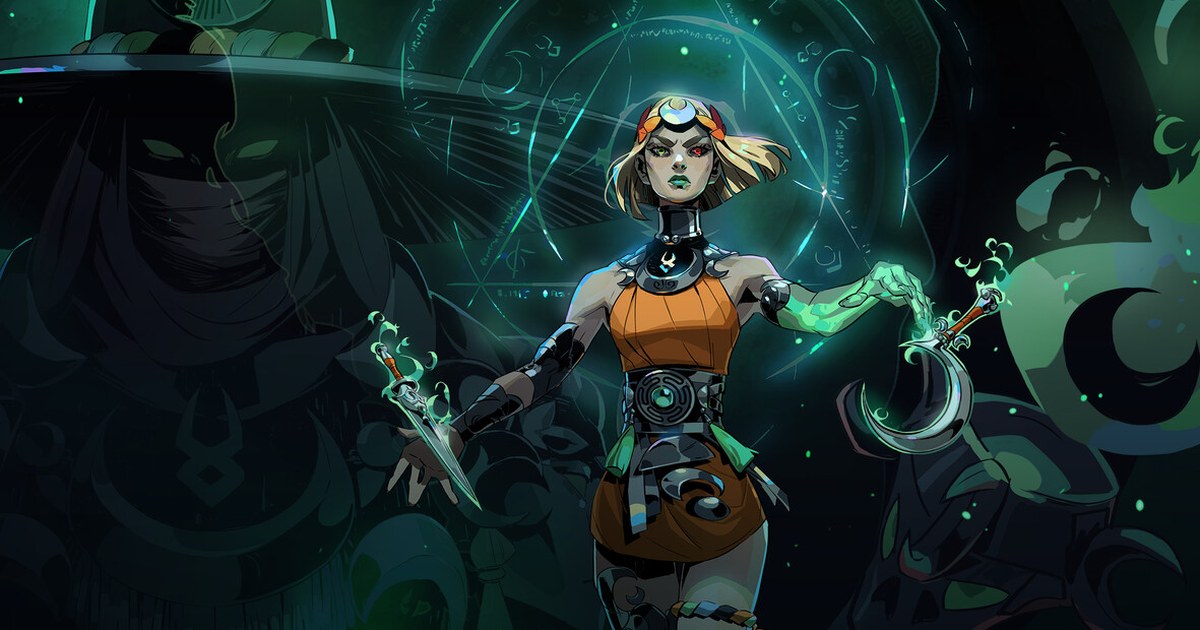
Verdict: Hades II keeps the first game’s representation choices and adds a few of its own. The pantheon is still deliberately multi-ethnic, and the new Hestia is an older, heavy-set Black woman with vitiligo. Melinoë is bisexual, with optional romances with two women (Nemesis, Eris) and two men (Moros, Icarus). Chaos is still “they”. The cast has a wider range of body types, which progressive outlets praised as “more inclusive”. What it doesn’t have is a message: the story is about a witch fighting the Titan of Time to rescue her family, the romances are optional, the men around Melinoë are capable allies, and Aphrodite is as openly sexy as ever. There’s no consultancy, no pronoun menu and no censored build.
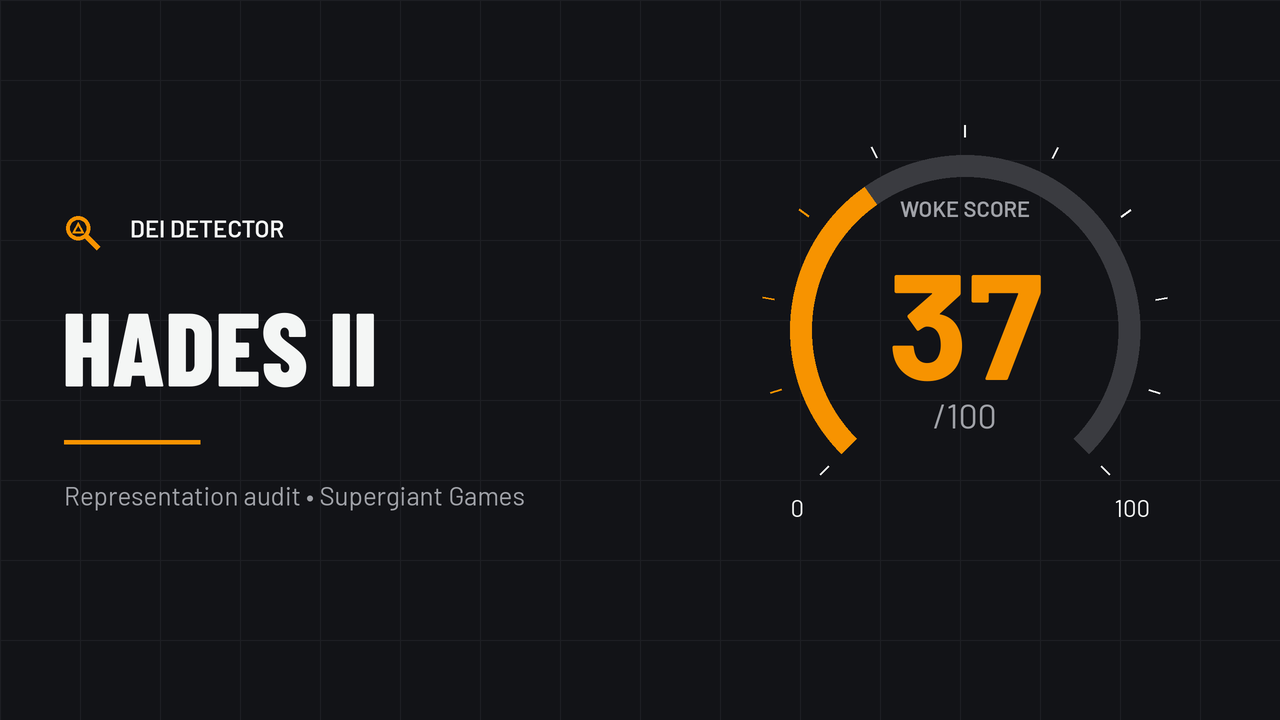
Woke Score: 37/100. Deliberate, confirmed casting and relationship choices, carried over from the first game by the same team, plus a broader-body-types design direction. What keeps it in the 30s: every romance is optional, Chaos’s genderlessness has roots in the myths, the redesign rows (Aphrodite’s face, Chaos’s new look) are about taste rather than de-sexing, the women are still designed to be attractive, and no consultancy, publisher pressure or regional censorship is involved.
Woke Score graphic
This is the standing page for Hades II (Early Access on PC from May 2024; 1.0 on PC, Switch and Switch 2 on 25 Sep 2025; PS5 and Xbox Series on 14 Apr 2026). New evidence gets merged here; the URL stays fixed. The first game has its own page: Hades.
How the score breaks down
Scored against our How we score rules:
- Multi-ethnic pantheon, continued and extended (casting and design), +15. The first game’s deliberate choice (Kasavin: the gods “represent all the people of the world”, Kotaku 2020; see Hades) carries over, and the new faces follow it. The biggest new example is Hestia, drawn as an older, larger Black woman with vitiligo, a goddess with no fixed ethnicity in myth but traditionally shown in Greek-style statues (Know Your Meme’s explainer on the backlash; VideoGamer). It’s the same weight as the first game: a clear, intended choice, but applied to gods and never framed as a message.
- Bisexual heroine with optional romances, +12. Melinoë can romance Nemesis and Eris as well as Moros and Icarus, and TheGamer describes the game’s handling of more than one relationship at once as “a surprisingly nuanced approach to polyamory” (Wikipedia’s Melinoë article; TheGamer and Vandal guides). A post-launch patch added more romance scenes and dialogue (GosuGamers). It’s short of full weight for the same reason as the first game: every romance is optional and gift-gated.
- Creator intent, carried over, +5. Supergiant hasn’t made a new representation statement for Hades II that we could find, but it’s the same writer, art director and world. Kasavin said of the first game that the setting was a chance “to portray a world with different values than the one that exists today” (TheGamer, 2021), and Hades II uses the same relationship model. It’s lower than the first game’s +10 because the statement wasn’t repeated.
- Broader body types as a design direction, +3. Kotaku’s “Hades II Is The Kind Of Hot We Need Right Now” (Alyssa Mercante, 19 Apr 2024) praised the “burly bearness of Hephaestus” as “a more inclusive approach to body types than seen in the first game” and “the muscle momminess of Hecate and Nemesis” as “not a singular, decidedly straight male-oriented take on attractiveness”. TheGamer framed it as the sequel “fixing” the first game. It counts only a little: Hephaestus is lame in the myths, so showing his disability is faithful, and the article’s own point is that the cast is still designed to be hot.
- Chaos as “they”, +2. Chaos is still genderless and referred to as “they”, as in the first game and in Hesiod.
- Aphrodite redesign: noted, not scored. Some players called her new face “manly” and made mods to “fix” her or remove her portrait (GGRecon). Art director Jen Zee’s reason is in the story: the Olympians are at war, so Aphrodite is “geared up”, and “Aphrodite takes to the battlefield in the Trojan War according to The Iliad” (Creative Bloq / ImagineFX). She isn’t de-sexed: Kotaku describes her portrait as nearly naked, with one “perfectly placed tendril”. A face the audience didn’t like isn’t woke censorship, so it adds nothing.
- Chaos redesign: noted, not scored. Chaos now looks more human, “more attractive” and “more feminine” (Game Rant). That’s the opposite of de-sexing, and it’s a lore choice (the new Chaos holds the old one’s head), so it adds nothing.
- Track-record rule (rule B): not applied. We found no documented DEI mandate, consultancy history or censorship record for Supergiant. The first game’s representation choices are scored on its own page and carried into this one only through the creator-intent line above, so they aren’t counted twice.
- Consultancy check (rule A): none found. No sensitivity, cultural or DEI consultant in the credits (MobyGames, 134 people). Supergiant’s FAQ lists translators, voice cast, visual artists and musicians as its outside contributors. Not in Sweet Baby Inc.’s documented gameography or on the “Sweet Baby Inc detected” Steam curator’s current list.
- Remake rule (rule C): partial weight considered, nothing scored. Hades II re-creates characters from the first game, so we checked the returning cast. The changes we found (Aphrodite’s war gear, Chaos’s new look, redrawn portraits) either have a stated story reason or don’t reduce anyone’s attractiveness.
- Rule D: nothing to count. The progressive press praised the game; we found no documented progressive or feminist attack on it.
- Rule E (feminism): not triggered. The cast is female-heavy because the story is about witchcraft, and Jen Zee says the powerful women come from “the fascinating source material in the ancient myths” and her own sense of what’s “interesting and appealing”. Hecate is Melinoë’s mentor and a “badass” warrior, but the men aren’t written as fools: Odysseus is Melinoë’s sharp, loyal strategist, Heracles is a formidable fighter, and Apollo, Hermes and Hephaestus are competent allies. The women aren’t made deliberately unsexy either. It’s neutral.
Confirmed findings
- Pantheon: Hestia’s design was the flashpoint. A viral “Which way, western man?” post compared a classical statue, an anime Hestia and Supergiant’s version, and a Steam thread called the game “a little too woke” (Know Your Meme; GGRecon). The design itself is confirmed; what it means is argued both ways.
- Relationships: four romance options, two of each sex, all optional. The main story, freeing the underworld from Chronos, doesn’t require any of them.
- Designs: Melinoë, Hecate, Nemesis, Selene and Aphrodite are designed to be striking and attractive. Hephaestus is heavier and drawn with his disability (TheGamer), in line with the myths’ lame smith god. The body-type range is wider than in the first game.
Checked and not confirmed (or ruled out)
| Talking point | Finding |
|---|---|
| New non-binary / they-them characters | Not found. The only “they” character is Chaos, carried over from the first game. |
| Aphrodite de-sexed | Ruled out. She’s geared up for war but still near-naked in her portrait; the complaints are about her face. |
| Chaos made “woke” | Ruled out. The redesign is more human and feminine, not a political statement, and Chaos was already genderless. |
| DEI or sensitivity consultants credited | Ruled out. None in the credits or in reporting. |
| Men written as useless or villains for being men | Ruled out. Odysseus, Heracles, Apollo and Hermes are capable allies; Chronos is the villain because he’s Chronos. |
| Designs softened between Early Access and 1.0 | Not found. No reports of costumes being covered up during Early Access or at the console launches. |
| Censored regional build | Not found. Every platform and region has the same content. |
Cleanest version and regional notes
There’s no cleaner version: PC, Switch, Switch 2, PS5 and Xbox all share the same script and art, and the choices above are part of the original design rather than a later edit. English is the original language; the 14 other languages are translations. The romances can be skipped by not giving those characters ambrosia; the casting and design choices can’t.
Compared with Hades (42), the sequel scores a little lower: the same casting and relationship model, but no fresh creator statement about “different values”, and no Achilles-style headline same-sex couple in the main cast.
DEI Detector scorecard
| Signal | Present? |
|---|---|
| Deliberately multi-ethnic pantheon (incl. Hestia) | Strong (+15) |
| Bisexual heroine; optional same-sex romances and polyamory | Present (+12; optional) |
| Creator intent carried over from Hades | Present (+5) |
| Broader body types, praised as “more inclusive” | Present, minor (+3) |
| Chaos as “they” | Present, myth-rooted (+2) |
| Aphrodite / Chaos redesigns | Noted, not scored (story reasons; not de-sexed) |
| DEI / sensitivity consultancy credited | Not found |
| Sexual / feminine censorship | Not found |
| Progressive press attack | Not found |
| Girlboss framing (rule E) | Not triggered |
| Regional censorship | None |
Open to update
This page will be revisited if:
- Supergiant makes new statements about representation goals for Hades II.
- A sensitivity or DEI consultant turns up in credits or reporting (rule A would apply).
- Post-launch patches change character designs.
Sources: Creative Bloq / ImagineFX interview with Jen Zee (Chris Schilling, 20 Jul 2024); Kotaku, “Hades II Is The Kind Of Hot We Need Right Now” (Alyssa Mercante, 19 Apr 2024); TheGamer on body diversity and on Hades II’s polyamory; Game Rant on the Chaos redesign (Josh Cotts, 10 May 2024); Know Your Meme’s Hestia explainer; GGRecon on the “woke” and Aphrodite rows; VideoGamer on the Hestia backlash; Wikipedia’s Melinoë (Hades) article; TheGamer and Vandal romance guides; GosuGamers on the post-launch romance patch; Supergiant’s Hades II FAQ and its PS5 / Xbox announcement; Kotaku (Ash Parrish, 2020) and TheGamer (2021) Kasavin quotes on the first game; MobyGames credits; Wikipedia’s Sweet Baby Inc. gameography and the “Sweet Baby Inc detected” Steam curator list (checked 26 Sep 2026). Anything marked “confirmed” is tied to developer statements or the game itself, and anything else is labelled as unverified.