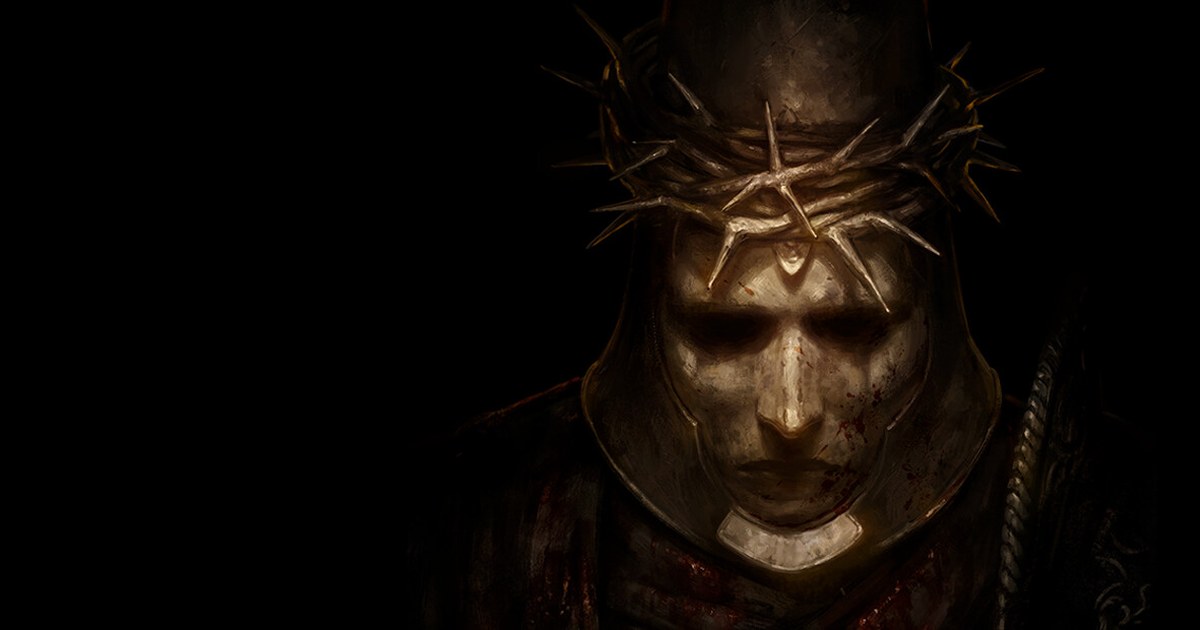
Blasphemous II
Verdict: Blasphemous II is the Seville studio’s sequel, published by Team17 like the first game, and it doubles down on the same thing: Andalusian Holy Week imagery, Spanish Golden Age painting, and this time Lorca verses and coplas in the dialogue. It adds nothing for representation, credits no consultant of any kind, and doesn’t sanitise: the most grotesque character cut from the first game for lack of resources is in this one, nudity included. The paid Mea Culpa expansion and the free True Torment and Third Sin updates follow the same line. Crisanta gets a big send-off, but as the payoff of a long rivalry between two penitents, not as girlboss writing.
Woke Score: 0/100. We found no documented DEI or woke content, consultancy, mandate or censorship in the game or its expansions. The only edits we found reports of are in the Japanese console builds, which are regional ratings changes and don’t make the original woke.
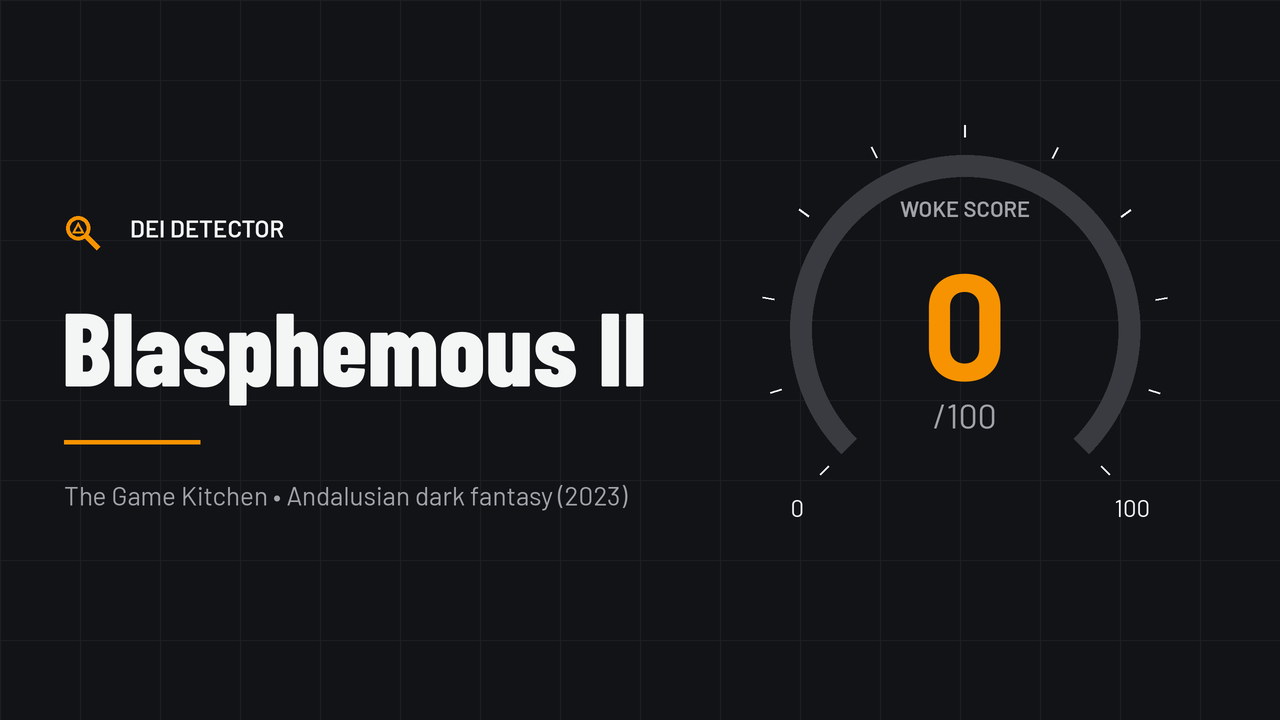
Woke Score graphic
This is the standing page for Blasphemous II (PC, PS5, Xbox Series X|S and Switch, 24 Aug 2023; PS4 and Xbox One, Nov 2023), including the paid Mea Culpa expansion (31 Oct 2024), the free True Torment New Game+ update released alongside it, and the free The Third Sin expansion (6 Jun 2026). New evidence gets merged here; the URL stays fixed. The first game has its own page: Blasphemous.
How the score breaks down
Scored against our How we score rules:
- Story, setting and creator intent: 0. Producer David Erosa said the aim was to make the game “closer to the classic Metroidvania genre”, with three weapons and a code base rebuilt from scratch. On the creative side, Enrique Cabeza told Vandal (Oct 2023) that the team only worked with what “naturally inspired” them: the besamanos hand-kissing ritual became a character, the Santiago de Compostela botafumeiro inspired the censer weapon, and “part of the work of García Lorca, and even coplas by Concha Piquer or Lola Flores,” run through the dialogue. There’s no representation goal in any interview, and no character was added to meet one.
- The religious imagery: 0. Same approach as the first game, which Cabeza describes in the same interview: “The game doesn’t go after religion; it uses a lot of the culture, because here religion is culture.” The Miracle is still a cruel, capricious divine force in a dark-fantasy world. That’s horror built out of Spanish Catholic art, not a progressive message.
- Cesareo and the nudity: 0. Cesareo, a bearded giant trying to breastfeed a baby from a breast sewn onto his chest, is based on José de Ribera’s 1631 painting Magdalena Ventura with her Husband and Son. He was cut from the first game because he “demanded a lot of work… and we simply didn’t have the resources” (Maikel Ortega, quoted by Play the Past), and he’s in the sequel. The ESRB lists “Partial Nudity” for Blasphemous II and describes “a handful of characters… with exposed breasts and buttocks; one prolonged sequence shows a giant breastfeeding a child.” He’s a Golden Age painting turned into body horror, not representation, and bringing him back is the opposite of sanitising.
- Expansions and updates: 0. Mea Culpa adds areas, bosses and a third ending in which the Penitent One restores his old sword. True Torment is New Game+. The Third Sin adds a noble castle, a whip, familiars and the story of Eliseo, nailed to the glass coffin of his lover, the castle’s duchess. None of it is representation-driven.
- Women (rule E): neutral, not scored. Crisanta, the knight-commander from the first game, frames the sequel: she fails to stop the Miracle and takes her own life, and in the Mea Culpa ending her soul claims the restored sword and strikes the final blow before ascending, while the Penitent One lays down his helmet. That’s the resolution of a rivalry built across both games between two penitents who, in her words in the first game, point “at the same sky”, and the Penitent One isn’t sidelined or mocked for being a man. The angelic guide Anunciada, the dancer boss Orospina and the veiled fencers are dark-fantasy figures from Spanish art and folklore. Fans’ affectionate “tall girlboss” nickname for Crisanta is about her armour and aura, not the Western girlboss our rule E targets.
- Consultancy check (rule A): none found. MobyGames lists 531 people. They cover The Game Kitchen’s team; Sunshine Animation Studio for the cutscenes; Keywords Studios and Lionbridge Games for localisation; Kakehashi Games for Japanese; and Team17’s release management, compliance QA, usability and user research, HR and finance teams. The one “Compliance Consultant” sits in Team17’s Compliance QA team, the group that tests against platform certification requirements, not content. No sensitivity, diversity, cultural or narrative consultant is credited. The game isn’t in Sweet Baby Inc.’s documented gameography or on the “Sweet Baby Inc detected” Steam curator’s list (checked 29 Sep 2026), and we found no internal review team.
- Track-record rule (rule B): not applied. Team17’s documented controversies (the 2022 Eurogamer workplace investigation and the withdrawn MetaWorms NFT project) are labour and business issues, not DEI mandates or censorship. Cabeza says it was Team17 that proposed a sequel, and we found nothing tying the publisher to content changes.
- Remake rule (rule C): doesn’t apply. It’s an original sequel.
- Rule D (green flag): not found. We found no progressive or feminist press campaign against the game. Reviews criticised the boss design and some players disliked the hand-drawn cutscenes, which is quality criticism only. There are no red flags to offset anyway.
- Localisation: 0. Unlike the first game, it launched with full English and Castilian Spanish voice acting, with Mexican actor Humberto Vélez in the Spanish cast. The text was translated by Keywords Studios and Lionbridge’s Barcelona team. We found no reports of injected inclusive language or softened religious wording in any translation.
Total: 0. Every line above scores zero.
Confirmed findings
- Publisher: Team17 published the digital release in all regions (ESRB lists “Team 17 Digital Limited”; Team17’s and Famitsu’s Japanese release notices). It isn’t self-published. The 2024 physical Collector’s Editions came from Selecta Play.
- Cultural sources: García Lorca, coplas, besamanos, the botafumeiro, and fencing from the Spanish verdadera destreza school, suggested by lead designer Maikel (Miguel) Ortega (Vandal). The sequel’s Archconfraternity bosses were, Cabeza says, partly inspired by the way Metal Gear Solid introduces FOXHOUND.
- Nudity and gore kept: confirmed by the ESRB summary (see above), including a pixelated level where “cherubs slowly skin a woman.”
- Setting: it follows the first game’s Wounds of Eventide update (Wikipedia; Famitsu).
Checked and not confirmed (or ruled out)
| Talking point | Finding |
|---|---|
| The sequel toned down nudity or gore | Ruled out for the game as a whole. The ESRB lists partial nudity and describes bare breasts and Cesareo’s breastfeeding sequence. Some players complain that the Third Sin castle’s female enemies are more covered than similar enemies in the first game. Fans in the same discussions point to the in-world reason, a noble household, and to Orospina and Cesareo. We found no evidence of a policy change. |
| Cesareo is trans or LGBT representation | Not supported. He’s taken from a 1631 Ribera painting and was designed for the first game’s art book, then cut for time. |
| LGBT or diversity content added | Not found in the game, Mea Culpa, True Torment or The Third Sin. The one love story we found, Eliseo and the duchess, is a straight couple. |
| Crisanta’s ending is girlboss writing | Not supported. It resolves a two-game rivalry; see rule E above. |
| DEI or sensitivity consultant credited | Ruled out. None in the MobyGames credits, the Sweet Baby gameography or the curator list. |
| Translations inject political wording | Not found. |
Cleanest version and regional notes
Play the standard international version on any platform: PC (Steam), PS5, Xbox, Switch or the later PS4 and Xbox One versions all have the same content. We’d suggest Spanish audio, since the script was written in Spanish and the dub is first-party. The Japanese console versions (Switch and PS5, 26 Oct 2023, CERO D) reportedly cover some nudity. Players with Japanese Switch copies report Orospina’s corpse and Cesareo edited, while players in Spain, the US, Australia and Romania report uncut copies. We found no official list of changes, so treat it as reported, not confirmed. Either way it’s regional ratings censorship, not a woke change to the original, and it doesn’t count against the score.
DEI Detector scorecard
| Signal | Present? |
|---|---|
| Representation added to story or cast | Not found (0) |
| Creator statement on representation goals | Not found (0) |
| Religious imagery used as an agenda | Not found (homage, per the developers) |
| DEI / sensitivity consultancy credited | Not found |
| Studio or publisher DEI track record | Not found |
| Sexual / feminine censorship (Western versions) | Not found (nudity retained) |
| Girlboss writing (rule E) | Not found (Crisanta is neutral) |
| Progressive press attack (rule D) | Not found |
| Localisation changes | Not found |
| Regional censorship | Japan (reported, unconfirmed) |
Open to update
This page will be revisited if:
- A sensitivity, cultural or DEI consultant, or an internal review team, turns up in the credits or reporting (rule A), including for Mea Culpa or The Third Sin.
- The Game Kitchen or Team17 says anything was cut, covered or rewritten for representation or offence-avoidance reasons.
- A documented list of the Japanese version’s changes surfaces, or any translation is shown to inject political wording.
Sources: Vandal, “Enrique Cabeza, el hombre que ha llevado la imaginería religiosa española a los videojuegos” (Sara Borondo, 28 Oct 2023); Wikipedia’s Blasphemous 2 article, citing producer David Erosa and the release history; Team17’s Mea Culpa announcement and PC Gamer on Mea Culpa and True Torment (Oct 2024); Gematsu, “Blasphemous II ‘The Third Sin’ update now available” (6 Jun 2026); ESRB rating summary for Blasphemous 2; MobyGames Windows credits (archived Nov 2024); Wikipedia’s Sweet Baby Inc. gameography and the “Sweet Baby Inc detected” Steam curator list (checked 29 Sep 2026); Eurogamer, “Inside Team17, following the Worms NFT firestorm” (2022); Play the Past, “Feeling History in Blasphemous: Monstrosity and Spectacle through Time” (Jack Orchard, 22 Feb 2022), quoting Maikel Ortega on Cesareo; Polygon’s Blasphemous 2 review; Famitsu on the Japanese Switch and PS5 release (26 Oct 2023); GameFAQs release data; r/Blasphemous player reports on the Japanese versions, Crisanta’s ending and the Third Sin designs. Anything marked “confirmed” is tied to developer statements, credits, ratings or the game itself, and anything else is labelled as unverified.