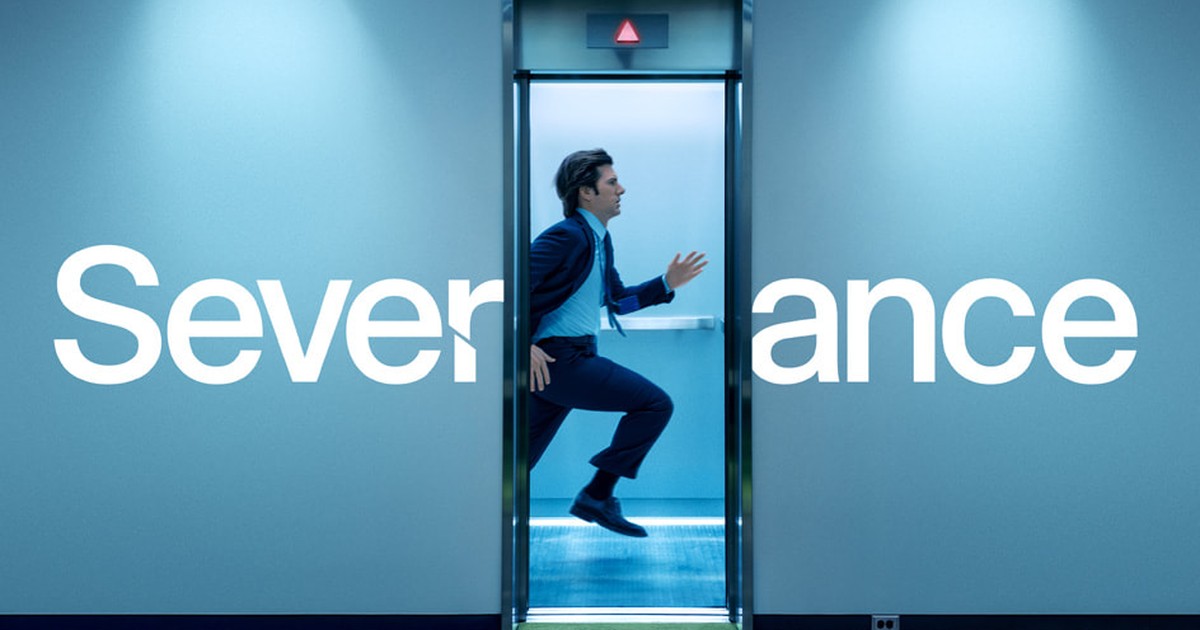
Severance
Verdict: Severance is a class / labor / corporate-cult allegory first. Diverse casting and Season 2’s Milchick race material exist, but the show’s sharpest DEI-adjacent beat — Lumon’s “inclusively re-canonicalized” Kier paintings — is widely read as satire of performative corporate diversity, not as an endorsement of HR DEI. Do not score anti-DEI satire as if it were a pride PSA.
Woke Score: 38/100 — progressive workplace-race acknowledgment and prestige-TV diverse casting raise the floor; labor/control spine and satire of corporate “inclusion” keep this well below agenda-led titles.
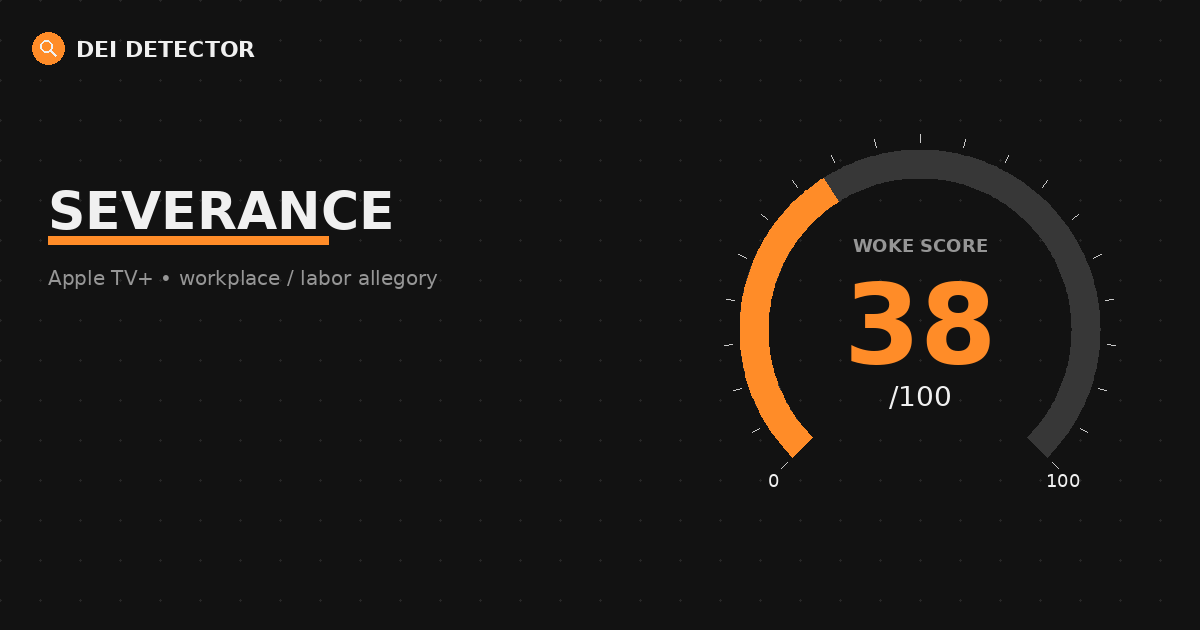
Woke Score graphic
This is the standing page for Severance (Apple TV+). New evidence gets merged here; the URL stays fixed.
Confirmed: workplace allegory, not identity-politics product
Creator Dan Erickson and executive producer / director Ben Stiller have framed the show around corporate control, cult-like founder worship, divided selves, and power — influences cited across interviews include The Office, Office Space, cult documentaries, and The Truman Show (Ars Technica; Script Magazine). Apple partners have been described as allowing the anti-corporate weirdness to stay intact.
Casting director Rachel Tenner (Backstage) said looks, ages, and ethnicities were deliberately open within the show’s specific tone — diverse casting as flexible casting, not marketed as a DEI season mission statement.
Season 2: Milchick, race, and Lumon “DEI”
Season 2 does go further on race through floor manager Seth Milchick (Tramell Tillman):
- Erickson told IndieWire / Polygon they did not want to “shy away” from what it means for a Black man to work at a tradition-bound, Civil-War-era family firm like Lumon
- The Episode 3 gift of Kier paintings “inclusively re-canonicalized… to help you see yourself in Kier” — historically white founder imagery recolored as Black — is presented as Lumon’s idea of inclusion
- Tillman and Erickson discussed racism, microaggressions dressed as pleasantness, and colorism (with Natalie) as part of Milchick’s arc
- Progressive outlets (IndieWire, Slate, Reactor / Tor.com) largely read the paintings as creepy corporate DEI opportunism — inclusion as another control tool — not as the writers preaching that recoloring founders equals justice
Rule applied (satire vs endorsement): score the authorial acknowledgment of workplace racism (real progressive theme). Do not treat Lumon’s fake-inclusion paintings as if Severance were selling DEI checklists. The joke/horror is on Lumon’s HR logic.
Progressive press vs DEI packaging
- Progressive / prestige press loves Severance for anti-corporate and alienation themes
- Western HR packaging (pronouns menus, pride marketing as the sell) is not the product
- Primary conflict remains severed labor, consent, and Eagan power — class/control, not a representation campaign
What this is not
- Not a remake scrubbing sexual content for modern politics
- Not a localisation / mistranslation controversy
- Not “anti-woke” propaganda either — Erickson’s race beats are earnest inside the show’s uncanny tone; they are just not the whole show
- Not a blank “colorblind utopia” like Silo’s stated premise — Severance’s world still contains racial hierarchy, then mocks corporate ways of papering over it
DEI Detector scorecard
| Signal | Present? |
|---|---|
| Authorial labor / corporate-control agenda | Strong (core product) |
| Season 2 workplace-race arc (Milchick) | Present / intentional |
| Satire of performative corporate DEI (paintings) | Strong — do not misread as endorsement |
| Diverse casting with open ethnicity brief | Present |
| Plot spine = identity-politics sermon | Weak |
| Pronouns / pride / HR-checklist packaging | Absent / not the vector |
| Sexual / feminine censorship | Not established |
| Activist mistranslation | N/A |
Recommendation
Watch Severance as anti-corporate psychological sci-fi. If you are screening specifically for DEI lecture products, this sits mid-low: race is acknowledged, corporate “inclusion” is lampooned, and the engine is still labor and control. Update this page if later seasons pivot from satire-of-DEI into sermon-for-DEI.
Sources include Erickson / Stiller / cast interviews via Ars Technica, Script Magazine, IndieWire, Polygon, Backstage (casting); Milchick paintings analysis and reporting via TVLine, Decider, Slate, and Reactor. Satire-vs-endorsement distinction follows on-screen Lumon framing plus those interviews; absences are noted as such.