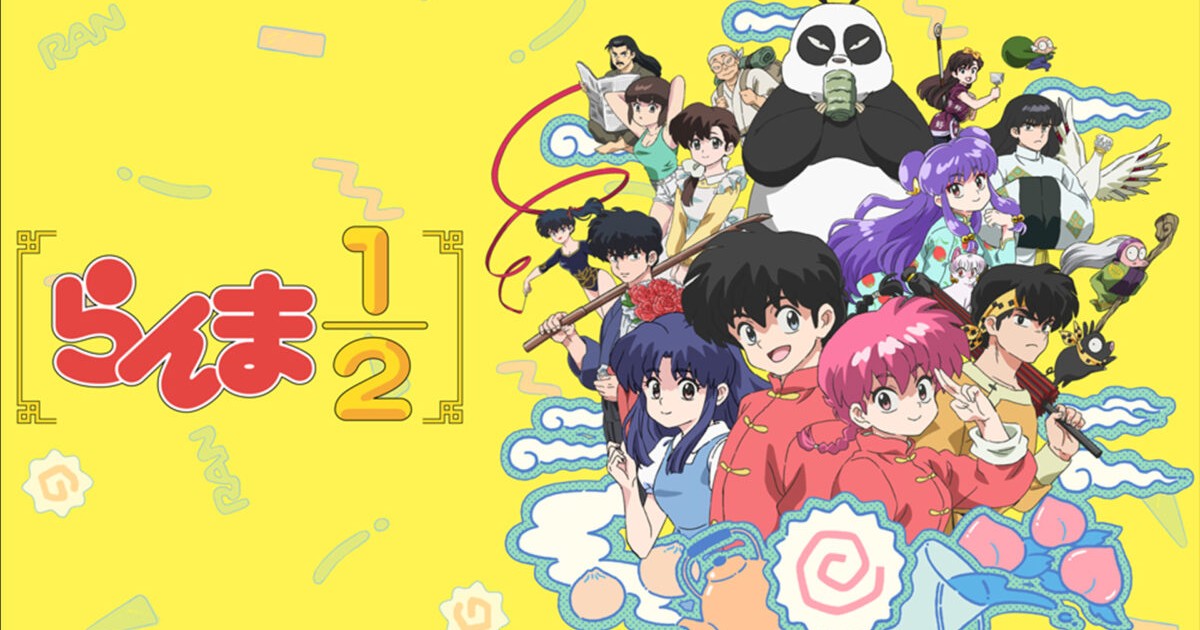
Ranma ½
Verdict: Ranma ½ is a gender-swap martial-arts gag comedy, not a DEI tract. Score the classic manga / 1989–90s anime low for progressive agenda. Score the 2024 MAPPA remake (Netflix global stream after Nippon TV) higher for documented nudity / fanservice soft-censor and modern-audience language hesitation — while staff still kept 1980s “act like a boy / girl” framing on purpose. Academic “trans allegory” readings are reception, not Takahashi saying Ranma is a trans allegory.
Woke Score: 38/100 — remake body scrub + selective modern sensitivity raise the franchise standing score; heavily offset because the core curse-comedy and betrothal farce remain intact, Netflix did not uniquely Western-edit a separate SKU, and clean older sources still exist.
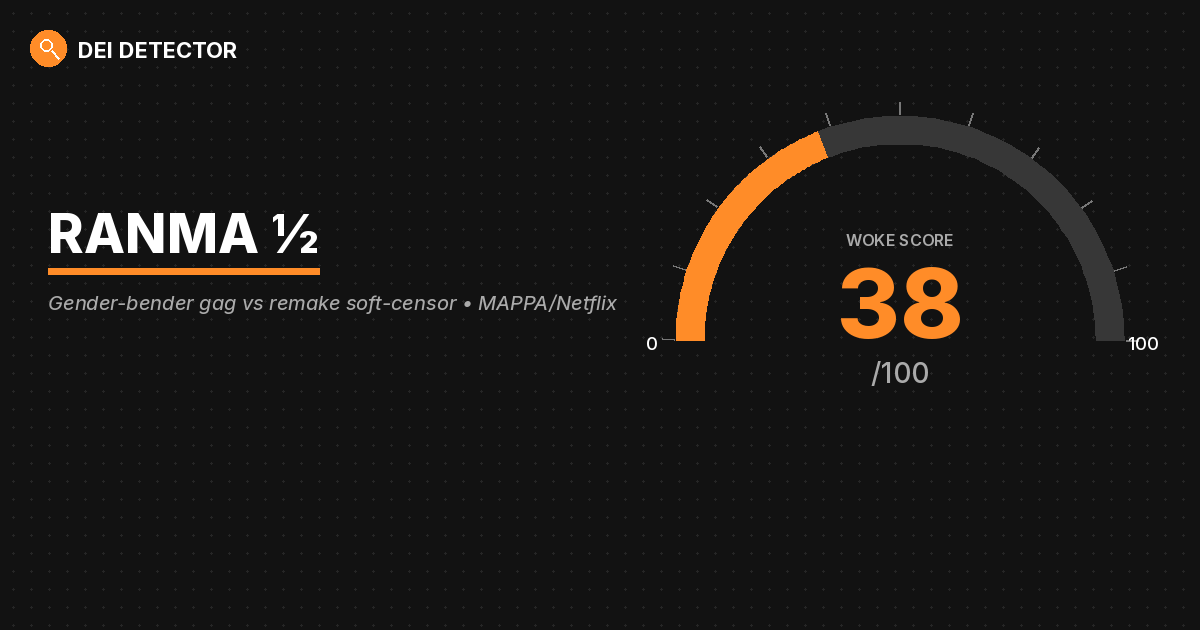
Woke Score graphic
This is the standing page for Ranma ½ (Rumiko Takahashi manga; 1989 anime; 2024 MAPPA remake). New evidence gets merged here; the URL stays fixed. Always distinguish original vs remake.
Confirmed: original is gender-bender gag comedy, not a DEI product
Ranma Saotome is cursed at Jusenkyo to become a girl when splashed with cold water — a gag engine for misunderstandings, baths, engagements, and martial-arts chaos. Takahashi’s series treats transformations as comedy facts the cast mostly accepts (Akane still deals with “boy Ranma / girl Ranma” as the same stubborn fiancé). That is not the same artifact as a modern pronouns-menu identity narrative.
Progressive / academic “trans allegory” essays exist (e.g. discussions citing Susan J. Napier and forum/ANN comment culture). Label those as readings. Takahashi has not publicly reinvented the 1980s serial as a DEI manifesto in the sources used here.
Cleaner / older sources (name them)
- Manga (Viz English volumes exist; JP tankōbon)
- 1989–1992 anime and related OVAs / films — era-typical nudity and slapstick intact vs 2024
- Prefer these when the remake’s soft-censor is the objection
Confirmed: 2024 remake soft-censors nudity for “modern times”
Series composition Kimiko Ueno (Newtype interview, translated at Furinkan / Rumic World):
- She does not think of Ranma’s nude scenes as mere fanservice, but says depicting nudity in modern times is difficult
- She wrestled with breast-touch gags and phrases like “acting like a boy / girl” as out of step with “the current era,” then kept the 1980s gendered language because changing it would “lie” about the setting
- Script treats male/female Ranma as the same character (visual/line tags differ)
ANN Answerman (Nov 2024) and remake discourse document nipples / butt-crack / explicit nude framing removed or reduced vs manga and classic anime — commonly attributed to stricter JP broadcast standards + global-audience calculus, not a proven Netflix-only secret cut. Wikipedia and production notes: remake airs on Nippon TV then Netflix worldwide; visual soft-censor applies across that pipeline.
Rule applied: intentional feminine/sexual scrub in a remake for modern politics/audiences counts toward the score even when the original remains clean. Name the clean builds above.
Partial: language / “outdated” dynamics — not a full progressive rewrite
Fandom documentation (Ranma Wiki and interview roundups) reports some dialogue around gender roles / non-heterosexual teasing adjusted for modern sensibilities, while iconic “act like a man/woman” plot lines stay because of the 80s setting. Treat Ueno’s on-record modern-difficulty comments as confirmed intent pressure; treat every specific line change as verify-from-subtitles, not folklore.
Kuno’s outrageous “I love both” bit was kept as period character comedy (Ueno), which cuts against a total sanitisation claim.
What this is not
- Original Ranma is not “secretly a 1980s DEI training cartoon”
- Remake is not automatically a “trans allegory series” because Twitter says so — staff frame it as 80s comedy with one person in two forms
- Netflix exclusivity ≠ proof of a unique Western censorship SKU; soft-censor is in the JP-produced remake itself
- Happosai pervert gags continuing in remake = evidence against total feminism scrub
DEI Detector scorecard
| Signal | Present? |
|---|---|
| Original progressive / DEI authorial agenda | Weak / absent (gag comedy) |
| Academic / fandom trans-allegory reception | Present — labelled reception |
| Remake nudity / body soft-censor vs classic | Strong (Ueno + visual comparisons) |
| Remake “modern era” language hesitation | Present (Ueno on record) |
| Full rewrite into identity-politics tract | Weak — core curse comedy retained |
| Netflix-only regional cut separate from JP | Not established |
| Clean older sources available | Strong (manga + 1989 anime) |
| Pronouns-menu / HR DEI packaging | Absent |
Recommendation
Read the manga / watch the 1989 anime for the unsoftened gender-bender slapstick. Use the 2024 MAPPA/Netflix remake knowing bodies and some edges were sanded for modern broadcast/global taste — that is why this standing score sits in the high 30s rather than the teens. Do not score the classic as woke because progressive critics wrote allegory essays; do not score the remake as a DEI bible when staff still refused to modernise the 80s gendered punchlines away.
Sources include Kimiko Ueno Newtype interview (Furinkan / Rumic World translation); ANN Answerman 2024-11-11 on remake nudity; Wikipedia production/streaming notes for the 2024 series; Ranma Wiki change summaries cross-checked against staff quotes; allegory discourse noted as reception (Napier citations in secondary discussion). Before/after body claims follow widely reported remake vs classic comparisons; no fabricated Takahashi “Ranma is trans” quotes.