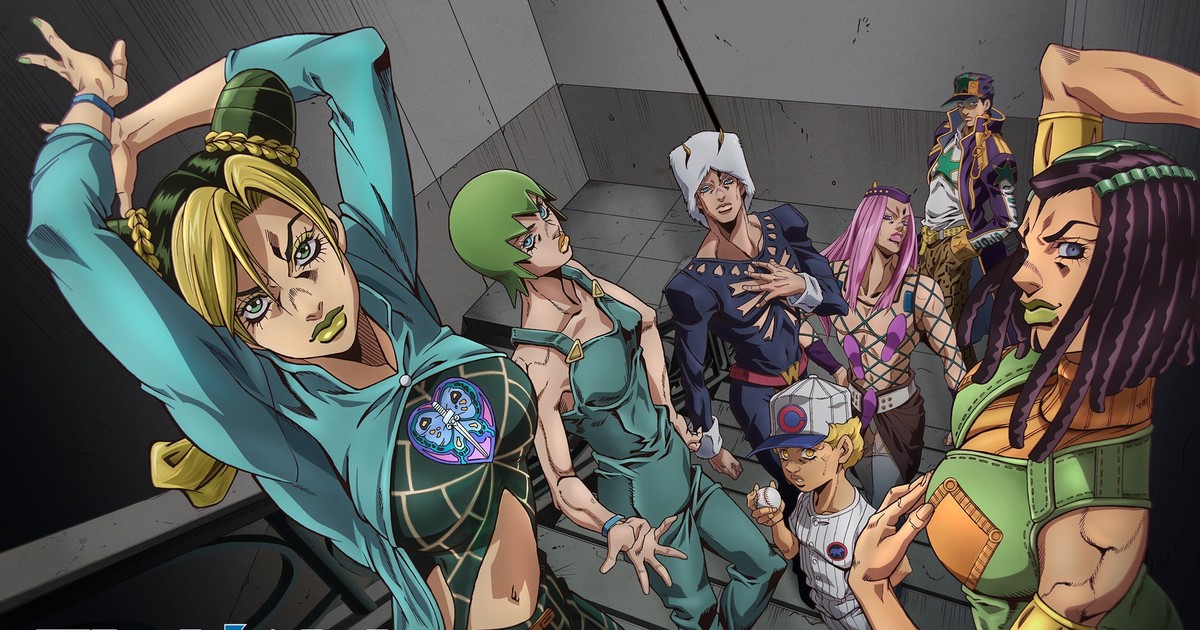
JoJo’s Bizarre Adventure
Verdict: JoJo’s Bizarre Adventure scores for authorial androgyny, fashion-forward male design, and later gender-nonconforming casting (especially Dragona Joestar in Part 9) — not for Western HR DEI checklists or Pride-month marketing as the product. Araki’s style and character sheets are the vector; fandom shipping and progressive press “JoJo is queer canon” campaigns are reception, not a localisation rewrite. Score the work’s messaging and design intent, not “fans ship Dio.”
Woke Score: 44/100 — real authorial queer-coded / GNC aesthetics across parts (stronger from mid-series onward; Part 9 raises the floor), tempered because this is fashion/character flair rather than a progressive political tract, and Western localisation controversies are mostly copyright names — not pronoun activism as the headline vector.
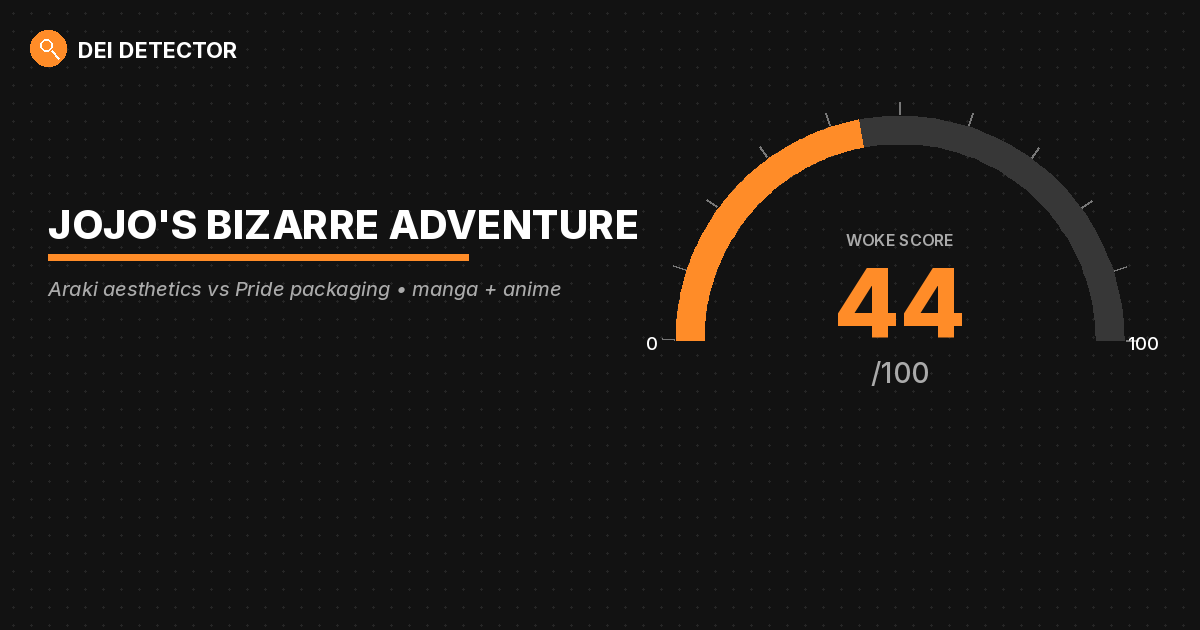
Woke Score graphic
This is the standing page for JoJo’s Bizarre Adventure (manga by Hirohiko Araki; anime chiefly by David Production). New evidence gets merged here; the URL stays fixed. Parts differ — do not flatten Phantom Blood muscle-men into The JOJOLands.
Confirmed: authorial aesthetics, not a DEI HR product
Public, attributable patterns (not fanfic):
- Araki’s male designs borrow fashion / Vogue / women’s posing by his own account (VOGUE+ interview coverage; JoJo Wiki interview archive). Androgyny and flamboyance are house style, decades before Western Pride packaging of the anime.
- DIO has long been queer-read; Araki has discussed gender-non-mattering lovers / open queer readings in older Japanese magazine contexts (Eureka / ScreenRant summaries). Treat “androgynous sex marker on a villain sheet” press as character-design signalling, not a Netflix DEI training module.
- Narciso Anasui (Stone Ocean): Araki has said he wanted an androgynous image beyond standard gender; early fem presentation was later masculinised — widely reported as editorial pressure, i.e. the opposite of progressive packaging forcing queer visibility.
- Explicit same-sex couples appear as side characters in later parts (e.g. Passione pairs) without being framed as Western representation checkboxes.
Rule applied: queer-coded fashion + later GNC characters = authorial. That raises the score. It does not equal “JoJo is a progressive equality allegory RPG” (compare Metaphor: ReFantazio).
Part 9: Dragona — authorial GNC, contested labels
The JOJOLands introduces Dragona Joestar: loves girls’ fashion, works at a boutique, receives cosmetic chest injections, uses feminine Japanese first-person (atashi), while narrator Jodio still calls Dragona “bro” / masculine kinship (ComicBook.com; ScreenRant; Kotaku; JoJo Wiki). Progressive outlets often headline “first trans Joestar.”
Precision required:
- On-page manga facts (fashion, injections, atashi, assault sequence) are authorial and scoreable.
- Binary “trans woman” confirmation from Araki is not established in the same sources; a French publisher editor (Pascal Lafine / Delcourt-Tonkam) has used that label — publisher editorial voice ≠ creator confirmation (JoJo Wiki notes this gap).
- Pronoun fights in English fan/official translations track ambiguity in the Japanese, not a clear Viz “they/them activism” rewrite of a previously binary character.
Score Dragona as authorial gender-nonconformity / body-modification presentation, not as proof that David Production’s TV anime is a Pride PSA.
Weak / secondary: Pride reception & Western packaging
Do not confuse these with the work’s core messaging:
- Pride-month essays and queer-fandom celebrations (e.g. Gayly Dreadful and similar) document community reception. Reception ≠ Araki writing a DEI tract.
- David Production anime adapts the manga’s looks and fights; progressive casting commentary is not the franchise’s marketed Western pillar the way pronouns menus are for some games.
- Viz / English localisation’s loudest long-running fights are music-copyright name changes and consistency issues (JoJo Wiki localisation notes) — not systematic scrubbing of romance into activist pronouns as the main controversy.
What this is not
- Not “woke because flamboyant villains exist” without tying to Araki’s documented design language
- Not a remake that scrubbed older fanservice for modern politics as the primary arc (contrast Ranma ½ remake / Persona remake watch pages)
- Not proof that every Joestar is a queer allegory — Parts 1–3 especially are battle shōnen with fashion flair
- Regional TV soft-censor of violence/gore in older broadcasts ≠ progressive agenda
DEI Detector scorecard
| Signal | Present? |
|---|---|
| Authorial androgyny / fashion queer aesthetics | Strong (Araki interviews + designs) |
| Later GNC / body-mod protagonist-adjacent (Dragona) | Strong in Part 9 manga; anime TBD |
| Explicit progressive equality / anti-oppression political plot | Weak — not the franchise thesis |
| Pride / progressive press celebrating “queer JoJo” | Strong as reception |
| Western pronouns / HR-checklist localisation as main vector | Weak / not established |
| Feminine / sexual scrub remake vs older version | Weak as franchise-wide claim |
| Fandom shipping treated as authorial messaging | Rejected — do not score ships as DEI |
Recommendation
Read / watch JoJo as Araki fashion-action surrealism. If your red line is Western DEI packaging, this franchise is a weaker match than remakes that rewrite dialogue and bodies for “the world we live in now.” If your red line is authorial queer/GNC character design, Part 6 onward and especially Part 9 sit higher — and that is on the page, not only in Pride blogs. Prefer Japanese manga volumes (and faithful anime cuts) as the source of truth when English discourse over-labels Dragona; update this page when Araki or the anime explicitly settles contested identity language.
Sources include Araki / VOGUE+ interview material via JoJo Wiki; Eureka / Dio queer-reading discussion via ScreenRant; Anasui androgyny notes via series interviews and fan/critical summaries (Gayly Dreadful Pride essay); Dragona chapter-1 facts and reception via ComicBook.com, ScreenRant, Kotaku, JoJo Wiki; French-editor “trans” characterisation noted as non-creator. Fandom shipping and Pride reception are labelled as reception, not fabricated creator quotes.